



FHA Loan Requirements in 2026: A Complete Guide for Tucson Homebuyers
Jun 22, 2026By Derrick Polder • NMLS #207630 • Published: Original Publication Date 6.22.26 • Updated: June 30, 2026
Read article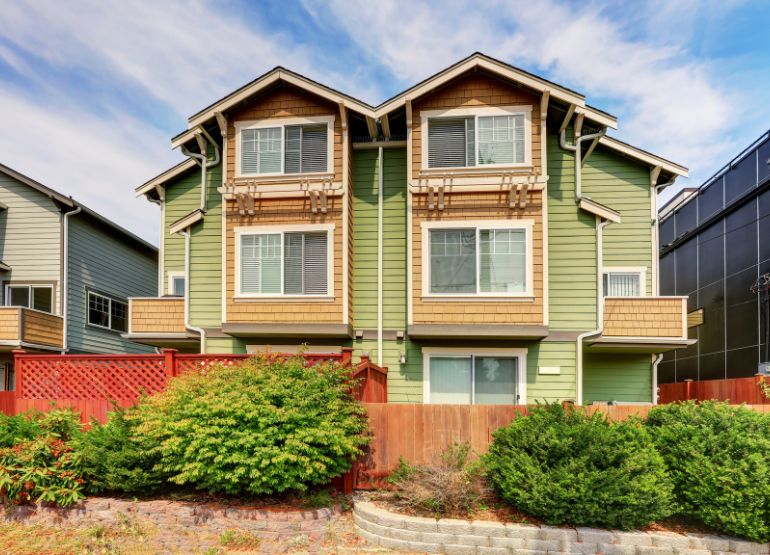
Unlock Your Real Estate Potential: Master Multi-Family Investing
A multi-family home is a residential property designed to house more than one family or household within the same building. These properties are a popular choice for both homeowners and real estate investors because they can generate rental income while building long-term equity.
For many first-time investors, multi-family homes offer an accessible entry point into real estate investing. Whether you plan to live in one unit and rent the others or purchase the property strictly as an investment, multi-family homes can provide steady cash flow and long-term appreciation potential.
Any residential property with two or more separate housing units is considered a multi-family property. Each unit typically includes its own entrance, kitchen, bathroom, and living space.
Some multi-family homes are owner-occupied, meaning the owner lives in one unit while renting the remaining units. Others are fully leased to tenants.
Common examples of multi-family homes include:
The size of the property often determines financing options, loan requirements, and long-term investment strategy.
Any residential property with more than one housing unit can be classified as a multi-family home. Owners can live in one of these units, in which case it’s known as an owner-occupied property. The owner will receive rental income from leasing the units to individuals or families. Here are some common examples of multi-family homes.

A duplex is a single property divided into two separate living units. Each unit has its own entrance and private living areas, with no shared kitchen or bathroom spaces.
Duplexes are especially popular among first-time investors because they can provide rental income while still qualifying for certain residential financing programs.
For example, if a duplex is valued at $300,000, some investors may use the “1% rule” as a rough estimate for rental income potential. Under this guideline, the property could potentially generate around $3,000 in monthly rent combined, or approximately $1,500 per unit.
A triplex contains three separate residential units within one building. Layouts can vary widely, including side-by-side units or stacked floor plans.
Like duplexes, each unit generally includes:
Triplexes often provide stronger cash flow potential than duplexes because of the additional rental unit.
A fourplex features four separate residential units within one property. Many investors consider fourplexes attractive because they maximize rental income while still qualifying for many residential mortgage programs.
Fourplexes can be ideal for investors looking to scale rental income without moving into larger commercial apartment properties.
There are many pros and cons to owning a multi-family property. While real estate can be a major investment, you’ll gain numerous financial advantages from owning and renting a multi-unit property.
The greatest advantage of owning a rental property is you’ll have a steady stream of passive income from your tenants. In fact, the more units you’re able to rent, the more income you’ll generate from your rental business. While you’ll still be responsible for upkeep, you can generally write off business expenses from your annual income taxes.
While property owners receive income in the form of rent payments, the multi-family home is itself a tangible asset, one that typically appreciates in value.
Investors commonly speak of real estate as a “buy and hold” investment. This means that you’ll purchase a real estate property today and then sell it for a substantial profit several years down the line. If you time the market strategically, you stand to reap major rewards from your real estate property.
Investors also speak of “diversification,” which means that they distribute their investments across multiple asset classes.
For instance, you might invest in the stock market, but that places your money at risk if your chosen company underperforms. Investing in tangible assets such as real estate ensures that your investments are diversified across multiple types of assets, which can help you in a struggling economy.
Find out how the DSCR loan can be the perfect non-qm mortgage loan for real estate investors.
To be clear, real estate investing doesn’t always require that you purchase a property with multiple housing units. Single-family homes can also make great investments. But how does owning a single-family house compare to investing in a multi-family unit?
Single-family homes offer several advantages, including:
Additionally, when you’re ready to sell the property, you’ll likely find a larger pool of potential buyers for a single-family home vs. a multi-unit investment property.
On the other hand, a multi-family property offers greater economic potential than a single-family unit for the following reasons:
While multi-family units require a larger initial investment, the income from multiple units will provide a greater source of monthly income than solely owning a single-family home.
Discover Fannie Mae’s 5% down payment loan for multi-family homes.
ADVANTAGES FOR MULTI-FAMILY BUYERS
Are you thinking about buying a multi-family home? Before you do, here are some of the most important factors to consider:
Additionally, you may want to consider your own exit strategy. If you invest in a multi-family home today, will you be able to sell the property and get clear of your investment? Failing to consider this may trap you in an investment property longer than you may prefer.
Multi-family homes can provide a great source of income and a solid foundation for your investing future. By properly maintaining and marketing your investment property, you’ll be better equipped to keep a steady stream of tenants.
You can use your cash flow to build your personal wealth or invest in additional properties to scale your business. Either way, you’ll be investing in your future while offering your community another housing opportunity. If you’re unsure how to start, contact a real estate professional to discover your options for a multi-family home.
This article is for educational purposes only and does not constitute financial or mortgage advice. Loan programs, rates, and guidelines may change at any time. All loans are subject to credit approval and underwriting. For guidance tailored to your situation, consult a licensed mortgage professional.
By Derrick Polder • NMLS #207630 • Published: Original Publication Date 6.22.26 • Updated: June 30, 2026
Read article
By Derrick Polder • NMLS #207630 • Published: June 15, 2026 • Updated: July 06, 2026
Read article
By Derrick Polder • NMLS #207630 • Published: June 15, 2026 • Updated: July 8,2026
Read article
Explore refinancing, mortgage recasting, PMI removal, and other proven ways to reduce your monthly housing cos...
Read article






Different levels of commitment - all start with a conversation.

A quick first step to review loan options and next steps with a local expert.
Ready to move forward now? Secure application - Credit review required
Not ready for a form? Ask a question and a local expert will follow up.